
[T]he most dominant theory by far as the one disseminated by al-Kindi’s De Radiis Stellarum, on the rays of the stars penetrating the earth and determining all processes of life and movement,’ arguing that ‘it is mainly through this theory that optics, i.e. the mathematical study of rays, came to play such an important role in magic and astrology.’ More specifically, [John] Dee believed that optics could teach one to ‘imprint the rays of any star more strongly upon any matter subjected to it,’ and utilised reflective mirrors and lenses, as natural catchers of light, to achieve this.
Legard, Phil; Cummins, Alexander. An Excellent Booke of the Arte of Magicke (p. 261). Scarlet Imprint | Bibliothèque Rouge. Kindle Edition.
One of the most common pieces of advice for starting witchcraft is to get your ass outside and learn about your local flora and fauna. It’s great advice that provides an immediate connection to the world around you both spiritually and physically and facilitates direct contact with the spirits of place. Even in the city handy allies can be found among the weeds, ornamentals, and stubborn natives lurking around every corner. The humble sidewalk dandelion is an absolute powerhouse when properly propitiated. Incredibly powerful banefuls like castor bean, black mustard, and datura grow like wildfire along the highways here in southern California. The bones of witchcraft are everywhere, you just need to learn how to look.
Why then do we never say look up?
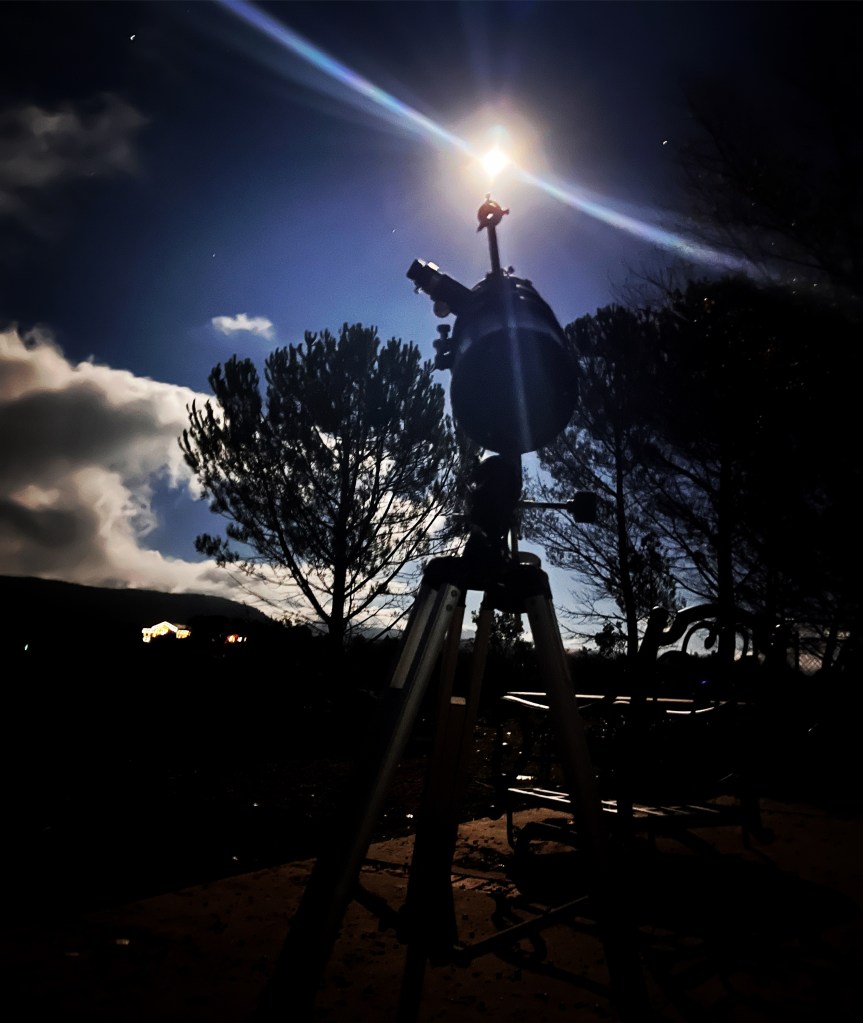
It’s bizarre when you stop to think about it. Astrology and planetary magick are everywhere but almost completely divorced from the physical objects. In theory our seasonal celebrations, correspondences, ritual timing, even the colors and numerology we use are intrinsically tied to the movement of the heavens and yet the objects of our devotion circle above our heads, silent and unnoticed. And yet seemingly arbitrary concepts become logical and grounded when tied to physical phenomenon. Venus is associated with the number 5 and the pentagram because if you plot it’s orbit from a geocentric worldview as was believed at the time, it appears to form a pentagram. The length of the planetary hours changes based on your location and time of year so that they can be calculated by observing the position of the sun rather than pulling out time keeping devices. You could go outside right now and figure out the current planetary hour with nothing but your hands if you were so inclined.
The precession of the equinoxes does present a problem and is probably the largest (perceived) hurdle to incorporating observational astronomy into occult practices. In short the gravitational effect of the Moon causes Earth to wobble on its axis, slowly changing our view of the skies over the course of 26,000 years. This wobble is pronounced enough that the “north star” changes over time and while Polaris currently is our north star in about 12,000 years Earth’s north pole will be facing a different part of the sky and Vega will replace it. Before Polaris, Thuban was our north star (Chumbley fans will probably notice a theme in the graphics below).
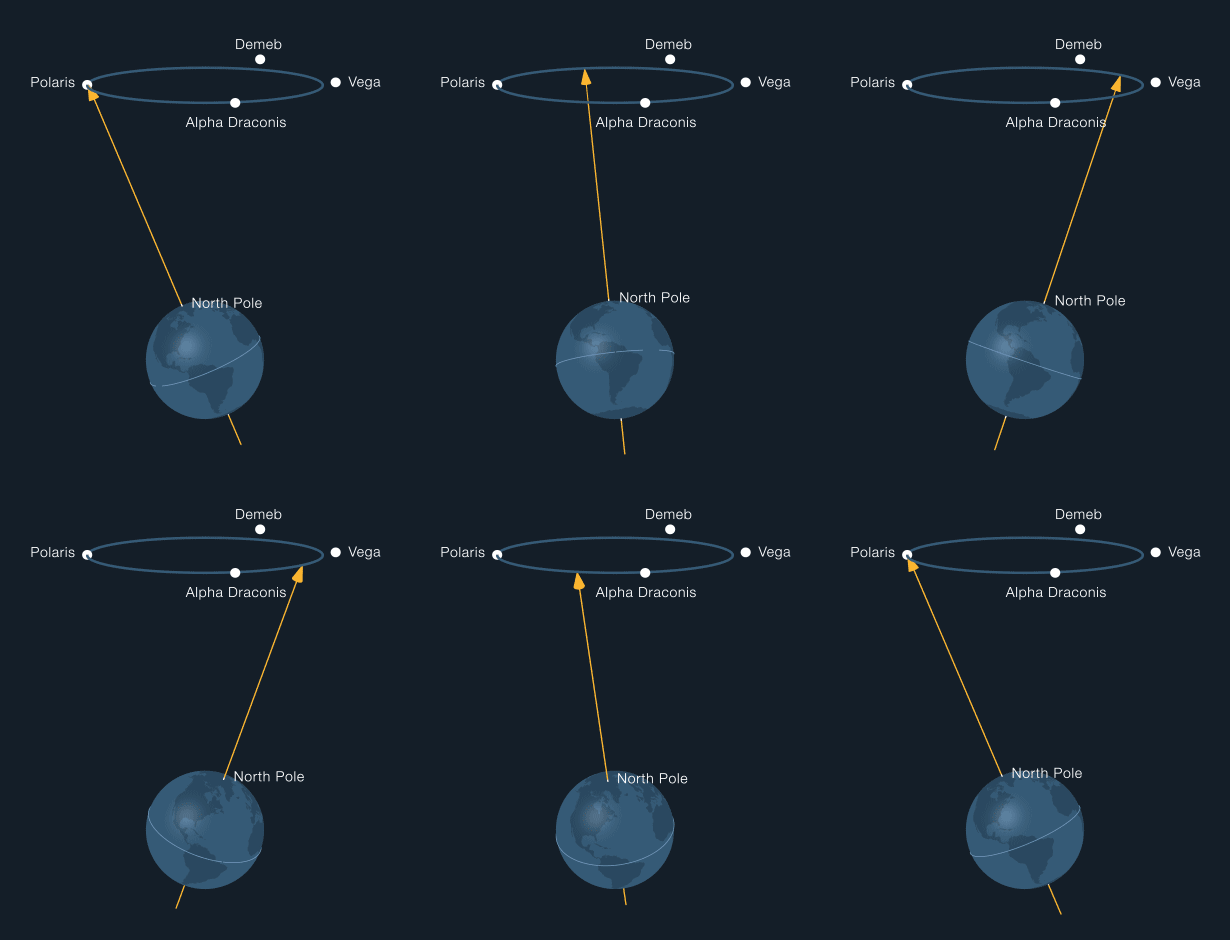
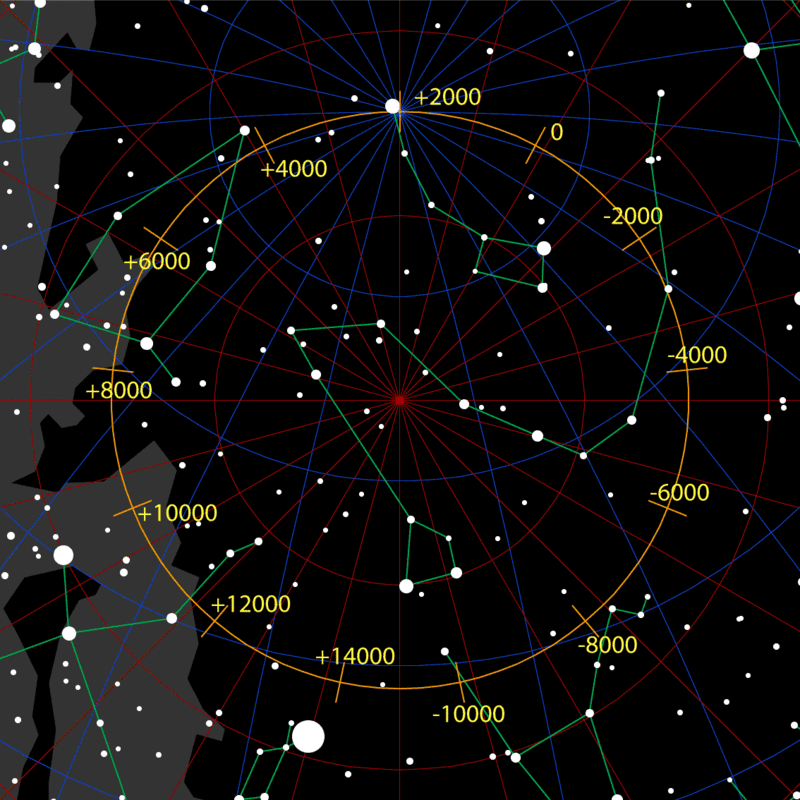
Since we are now looking at a different segment of the sky than those who developed of western astrology there is about a month discrepancy between between astrological transits and the behavior of the night sky.
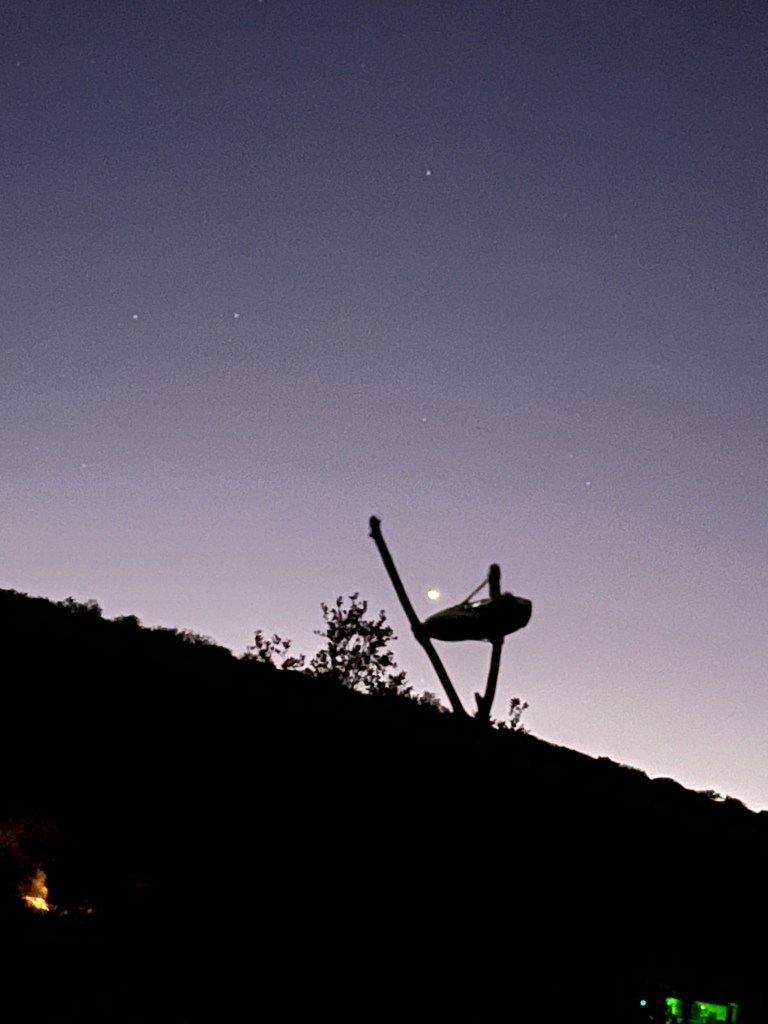

So what do we do about this? The easiest solution is handwave precession away and produce a reason why the actual objects and positions of stars are irrelevant to stellar magick but I find this reasoning unsatisfactory. We could switch to Vedic astrology which has always accounted for precession but that presents it’s own issues of compatibility and culture.
I present a simple solution: observation, a star map app, and a little research into your local archeoastronomy. I would hazard to guess that not every single fixed star, planet, and constellation is central to your practice and instead you have a handful of stars and planets you feel particularly drawn to; or perhaps your patron spirits are associated with a star or planet. Pick one or two as your initial area of study. Is it visible to the naked eye from where you live? If it is, try watching it over a period of time – what does it do? Why does it look the way it does? Where would be the best place to view it and what will you find if you go there? Input your location and the date of your next holy day into a star map app and look around. What do you see happening overhead on that day? Are your important stars doing anything interesting (rising, setting, conjunctioning a planet etc)? When does it rise or set with the sun? What do you see if you look at few days before and after your holy day? Is what you see in the sky more personally relevant than what you see on the ‘correct’ calendar date? Note where the sun and moon rise and set on the solstices, equinoxes, or holy days. Is there a noticeable landmark in any of those areas? Where would you go to get a good view of the solstices? And so on.
Incorporating observational astronomy in your practice is also an excellent way for witches on colonized land to connect with the spirits of place and even the dead in a non-invasive manner. It can be tempting to pilfer the myths and folklore of local indigenous people, especially if you are in a place far removed from rain-soaked lands that dominate the occult landscape but I expect readers are well aware of why this is Not Okay. But we all see the same stars and walk the same landscape.
Archeoastronomy gives us a respectful way to ground our stellar practice in the land, a way to learn which celestial phenomenon are significant to the land you reside in, why, and how these events are physically observed. Note that I am not suggesting you steal indigenous beliefs or rituals, I am saying that they observe particular celestial events for a reason and understanding that logic is immensely helpful in orienting your stellar practice to the actual sky. You’re looking for a stellar map for the year, a guide to when the sky doing something notable and relevant to your location. Here Venus historically marks the beginning of the agricultural year and given her prominence in my own practice it seemed logical to shift my spring rites to accurately coincide with her behavior. A few stars prominent in sabbatic witchcraft are also prominent in Kumeyaay folklore so I figure it makes sense to give them a bit of special attention in my own practice and make a habit out of observing them throughout the year. Even more excitingly, I learned interactions between the landscape and sky I noticed and incorporated into my practice were important to other people too!
One solstice morning I found myself on a small hill butted near my ritual area as the sun rose. The brightening sky illuminated an unusual-looking peak in the distant mountain range and to my delight, the morning sun rose over it as though being birthed from the canyons. I mentally filed this solstice marker away as a quirk of the view from my ritual area and something to incorporate into future solstice rites in this location. Neat but personal, or so I thought.
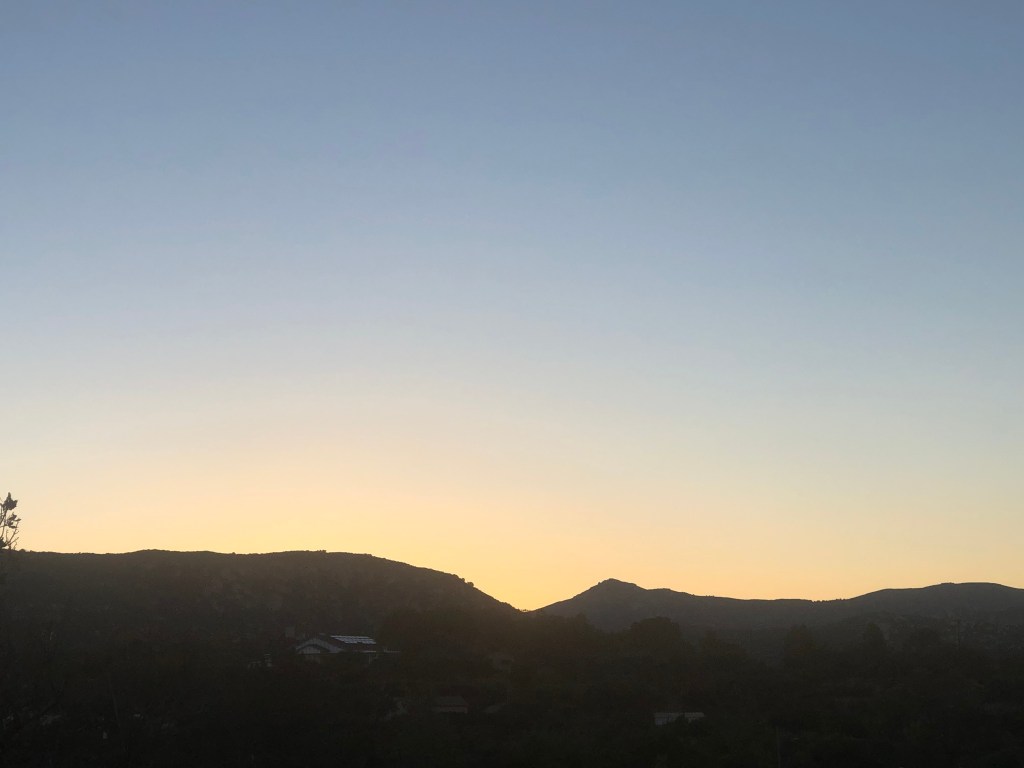
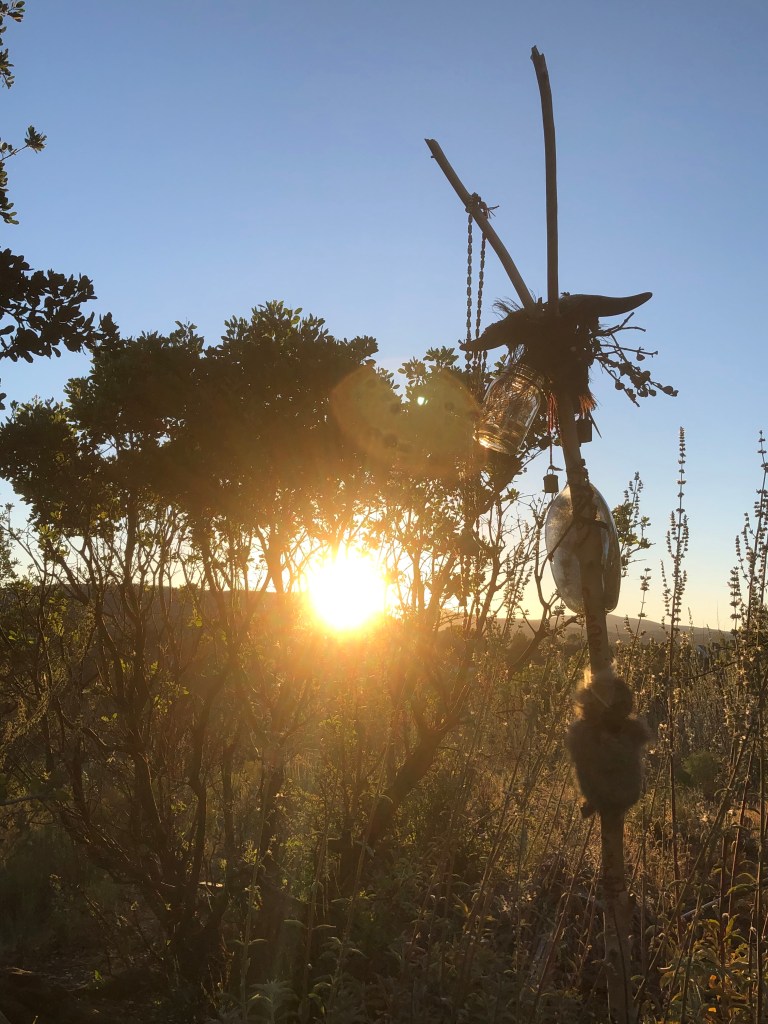
So imagine my surprise at seeing a photo of the solstice sun in the exact same spot while reading a book on Kumeyaay cosmology.
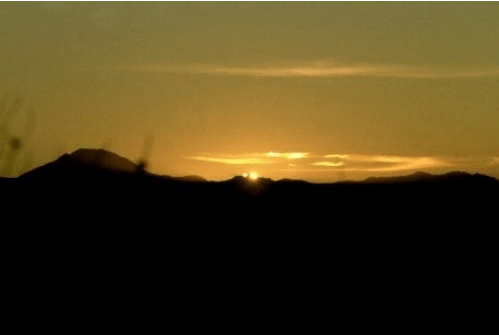
(Source: Maay Uuyow: Kumeyaay Cosmology)
As it turns out there are Kumeyaay observatories scattered around San Diego county orienting to this exact peak and it’s used to predict the winter solstice to a high degree of accuracy. When viewed from the top of Cowles Mountain the peak bisects the rising sun, making the hike to San Diego’s highest peak a popular activity on the first day of winter. After reading about what was done to the Cowles Mountain observatory (destroyed to make a fucking park because it wasn’t “archeologically significant”) I’m not particularly inclined to make that particular trek but confirming my suspicion that this peak marked the solstice was so incredibly exciting and learning it’s wider significance was even more so. Did I discover anything new? Of course not, this peak has been incorporated into observatories for thousands of years. But the excitement of discovering a connection between the heavens and your land cannot be overstated and these discoveries add a new level of depth to both stellar and nature-based practices.
TLDR; go look at the stars
Related reading:
Kumeyaay look to the sky. Viejas Band of Kumeyaay Indians. (2016, October 19). Retrieved December 8, 2022, from https://viejasbandofkumeyaay.org/viejas-community/kumeyaay-history/kumeyaay-look-to-the-sky/
The Kumeyaay celebration of Winter Solstice. San Diego Reader. (n.d.). Retrieved December 9, 2022, from https://www.sandiegoreader.com/news/1988/dec/22/cover-daggers-of-light-patterns-of-power/
HUDSON, T., LEE, G., & HEDGES, K. (1979). Solstice Observers and Observatories in Native California. Journal of California and Great Basin Anthropology, 1(1), 38–63. http://www.jstor.org/stable/27824945
Sentient nostalgias, old craft’d. Xoanon. (n.d.). Retrieved March 1, 2023, from http://xoanon.co.uk/archive/sentient-nostalgias/
SEYMOUR, T. P., & EDBERG, S. J. (1979). A Simple Method of Determining Archaeoastronomical Alignments in the Field. Journal of California and Great Basin Anthropology, 1(1), 64–70. http://www.jstor.org/stable/27824946
Robinson, M. (2007). Ardua et astra: On the calculation of the dates of the rising and setting stars. Retrieved December 16, 2022, from https://discovery.ucl.ac.uk/id/eprint/4840/
Williamson, R. A. (Ed.). (1981). Archaeoastronomy in the Americas. Ballena Press Anthropological Papers.


Leave a Reply