
Reddening bones has gained a bit of popularity with witches these days it would seem. In the simplest terms reddening consists of rubbing colorful materia onto bon as an act of devotion or more commonly among modern witches, to create a familiar spirit. It can be a way to enflesh a spirit by feeding and empowering it, calling it towards the world of the living. It can be an act of remembrance to venerate ancestors and spirits in the land of the dead. My experience with reddening is creating familiars but it is an extremely versatile way of working with the dead.
Humans worldwide have been ritually reddening the dead for thousands of years with ochre, cinnabar, and other pigments . There is evidence of bone reddening stretching from the “Red Lady” of Paviland2, one of the oldest examples of ritual burial in Europe to the Mayan Red Queen who died in approximately 600 AD. Bone reddening reappears independently throughout history over and over again though archeologists aren’t really sure why. Ochre in particular has held a special place in our history. It may be the first paint and the first form of artistic expression and is so special that scientists can track the evolution of human cognition by the use of ochre1. Red in many ways evolved with us and is intrinsic to the human experience.

But this is not a post about bone reddening.
This is a post about blackening.
I’m almost certainly not the first witch to expand the reddening concept to blackening (though I couldn’t find any while working on this). If red is life, black is death and the chthonic. Reddening empowers the spirit who occupied the bones in life, blackening seats spirits who never lived. In my practice reddening is used to house familiar spirits so once they’re seated there’s no reason to continue outside of aesthetic. But gods are not so simple.
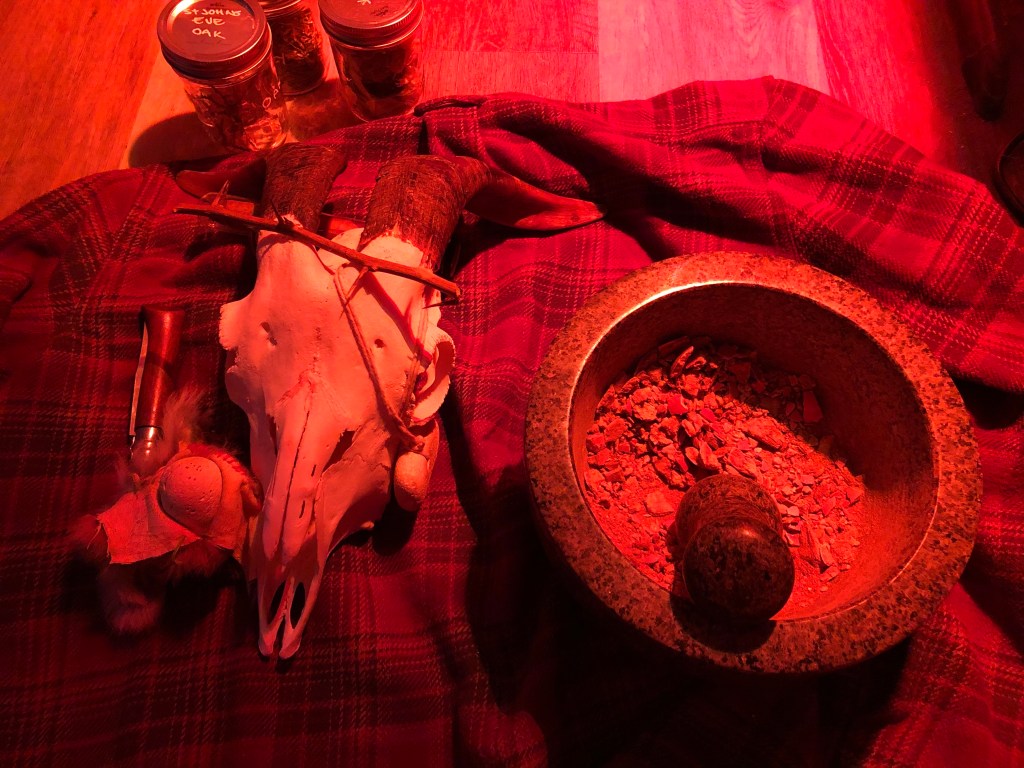
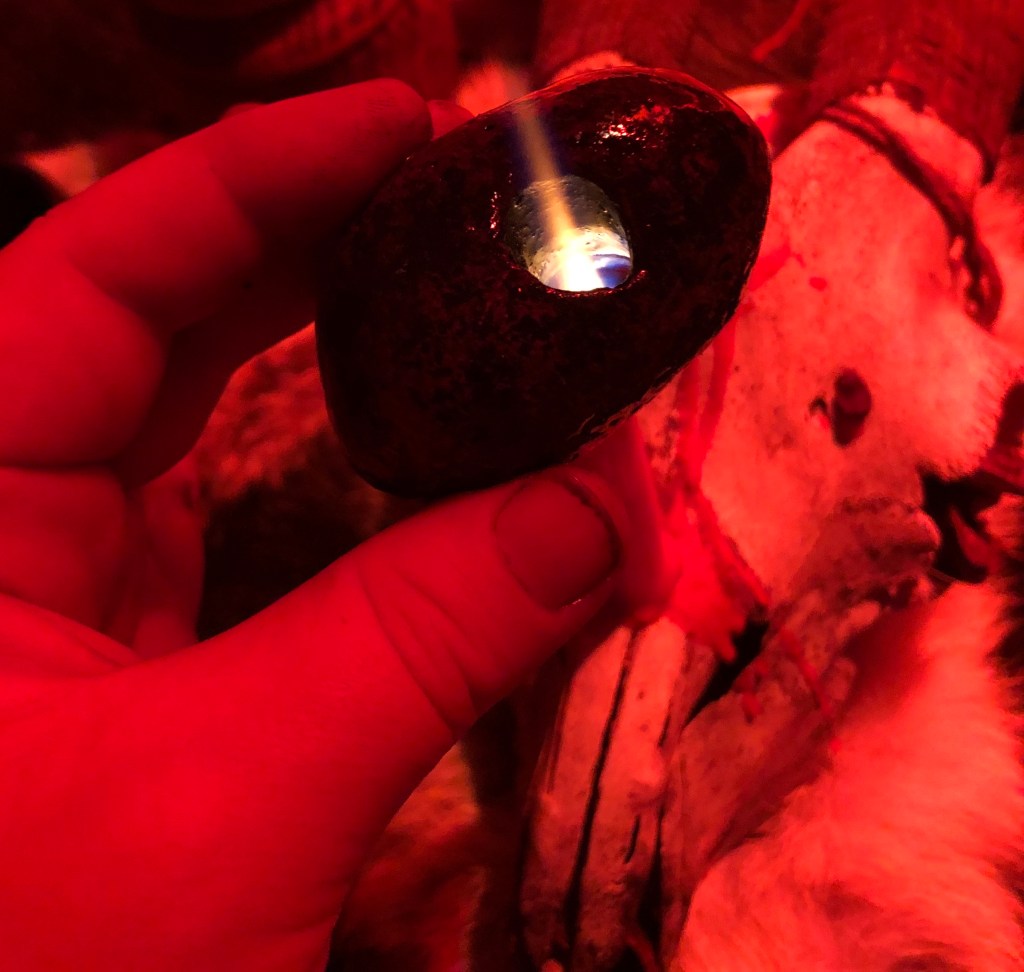
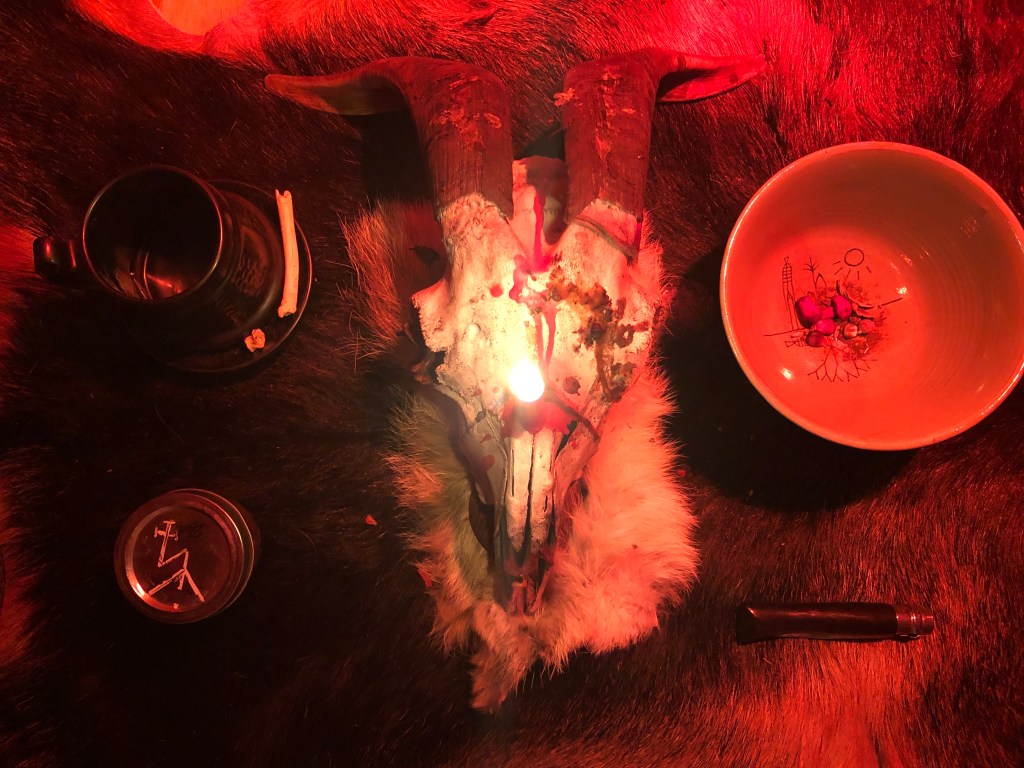
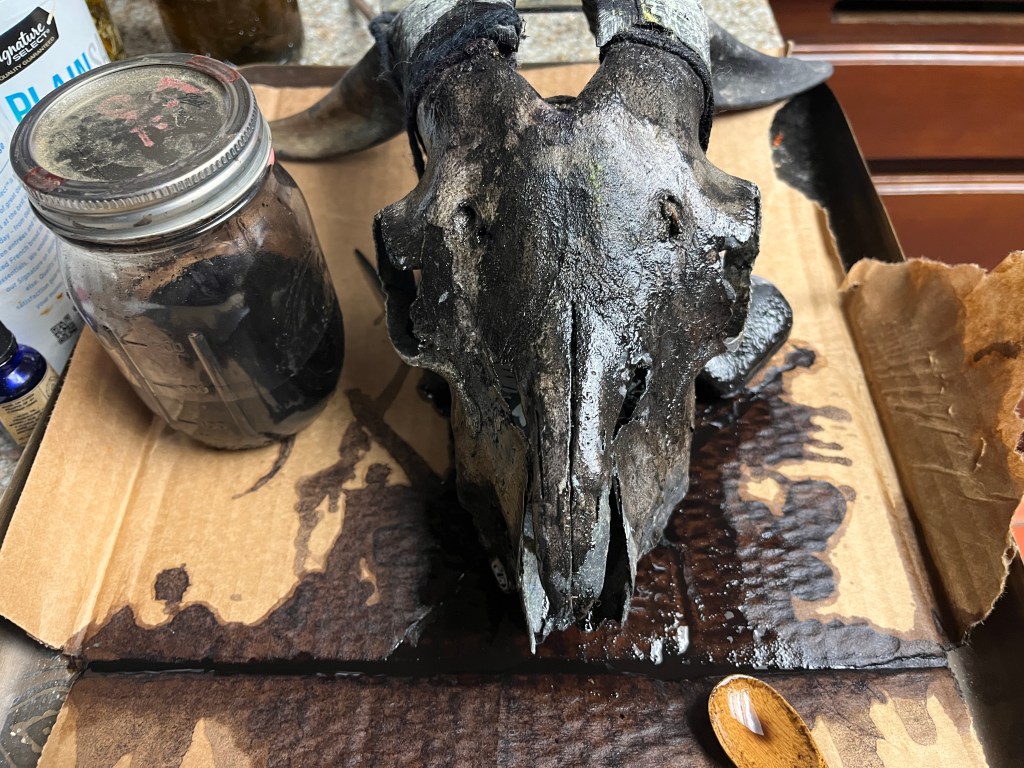
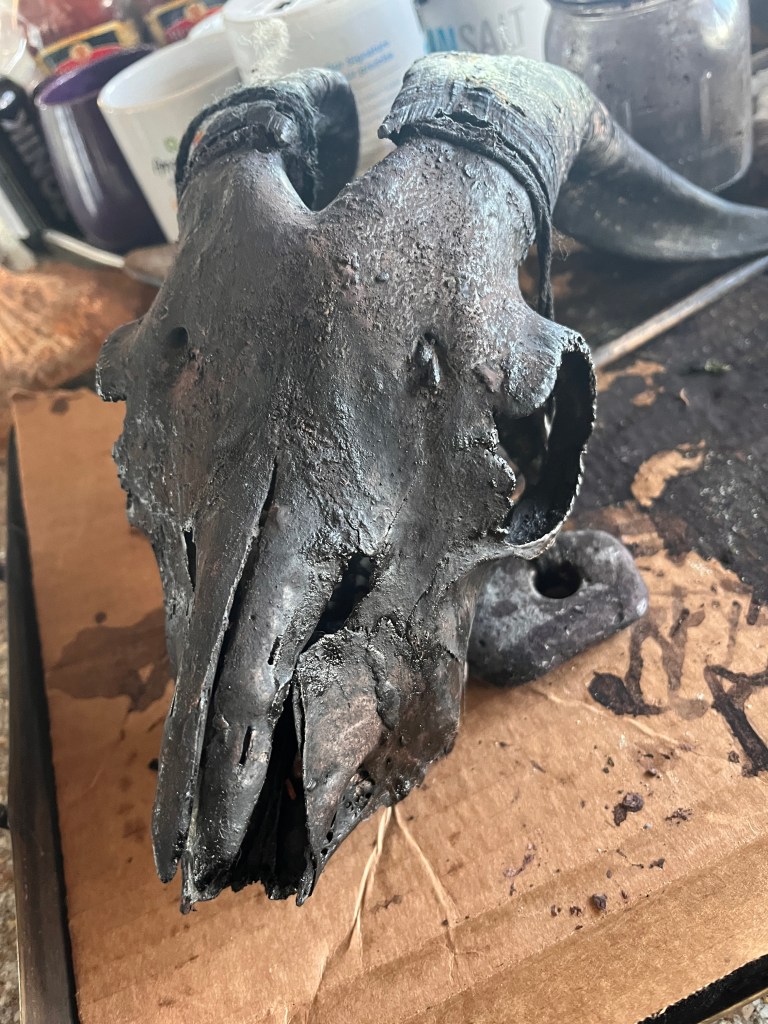
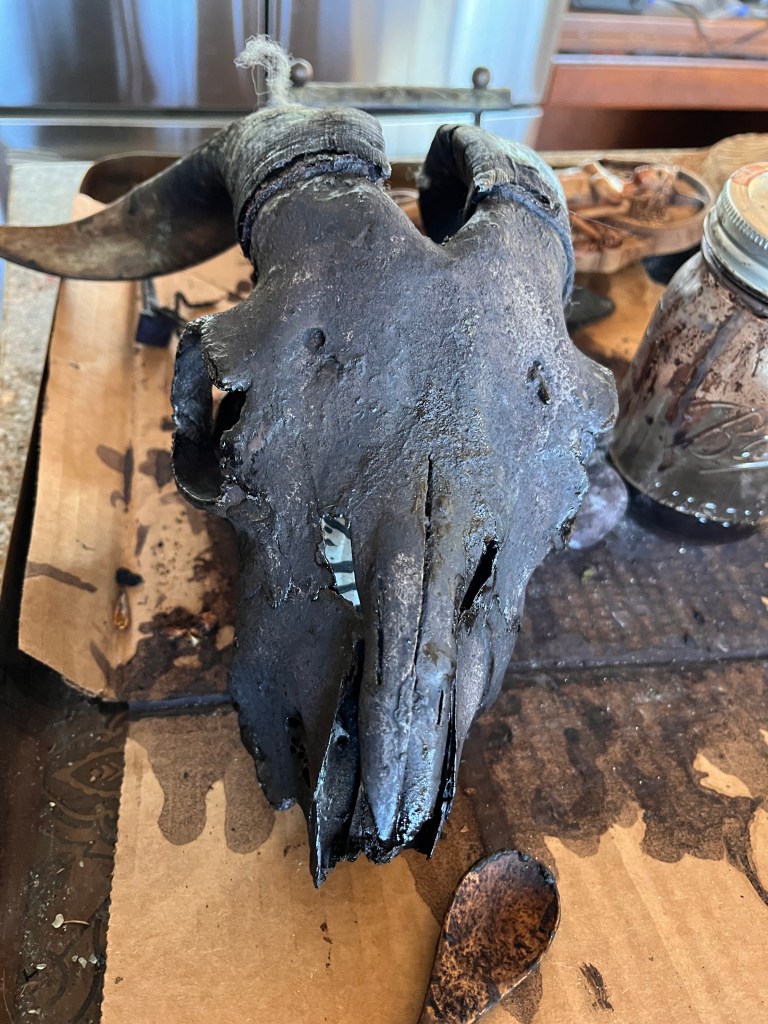
Materia was harvested on holy days to create the majority of the colorants in this first round of vivification. Oak galls, leaves, and twigs harvested on St. John’s Eve provided tannins needed to produce a black dye while various bits and bobs of iron collected over the years provide the mordant. Together they create the ‘masculine’ solar principal demanded so that the Dark Moon may eclipse the Sun. Others such as datura, tobacco, and ironwood empower the spirit to maintain a foot in this world while others still act as tools and offerings for the Goddess. The skull was incubated for the duration of the lunar month preceding the KA Rite. Occurring every winter solstice, KA is the Hieros Gamos between Serpent and Sorcerer and arguably the most important ritual in the Dragon Book of Essex. This is a period of arduous, orgiastic devotion preparing the sorcerer pass through the flame and forged anew should they be found worthy. This month of devotion, death, and marriage provided the perfect magickal ‘weather’ for the development of the skull. Like the sorcerer, the skull’s clayborn self was slain and rose anew in the body of the Divine.
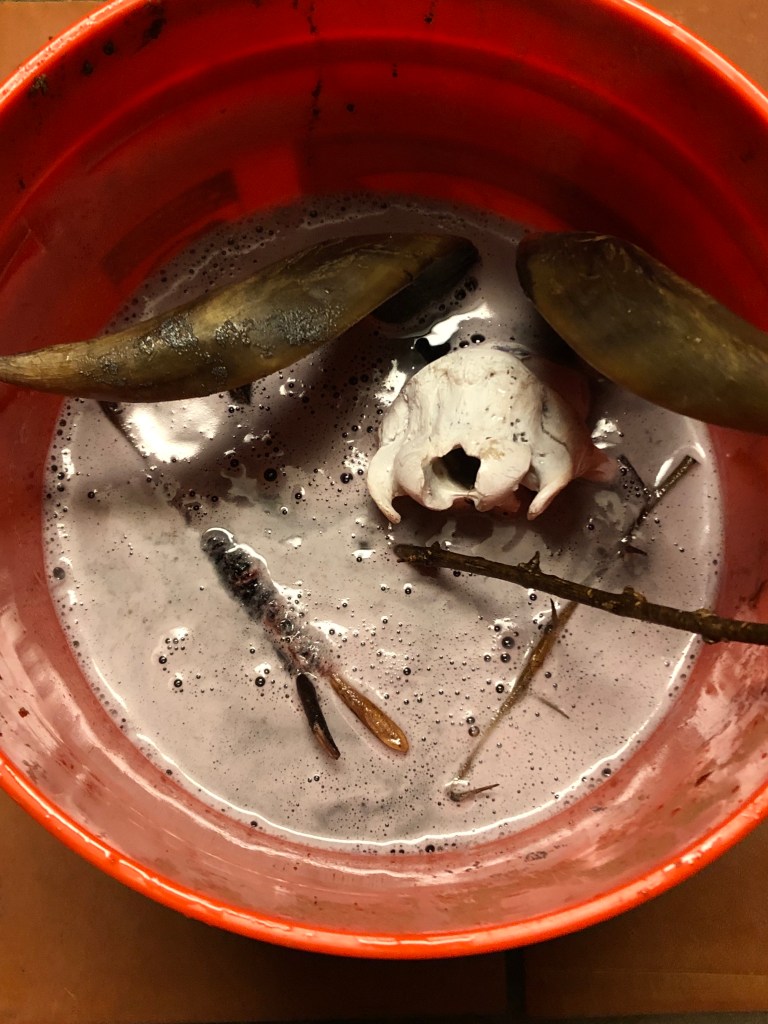
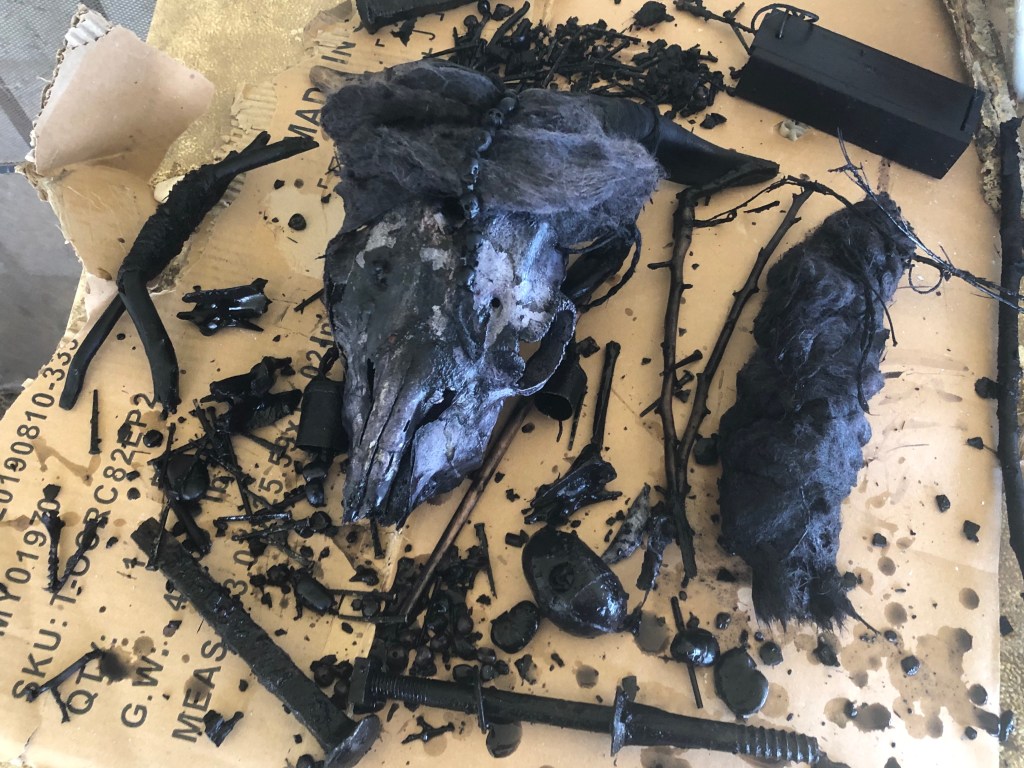
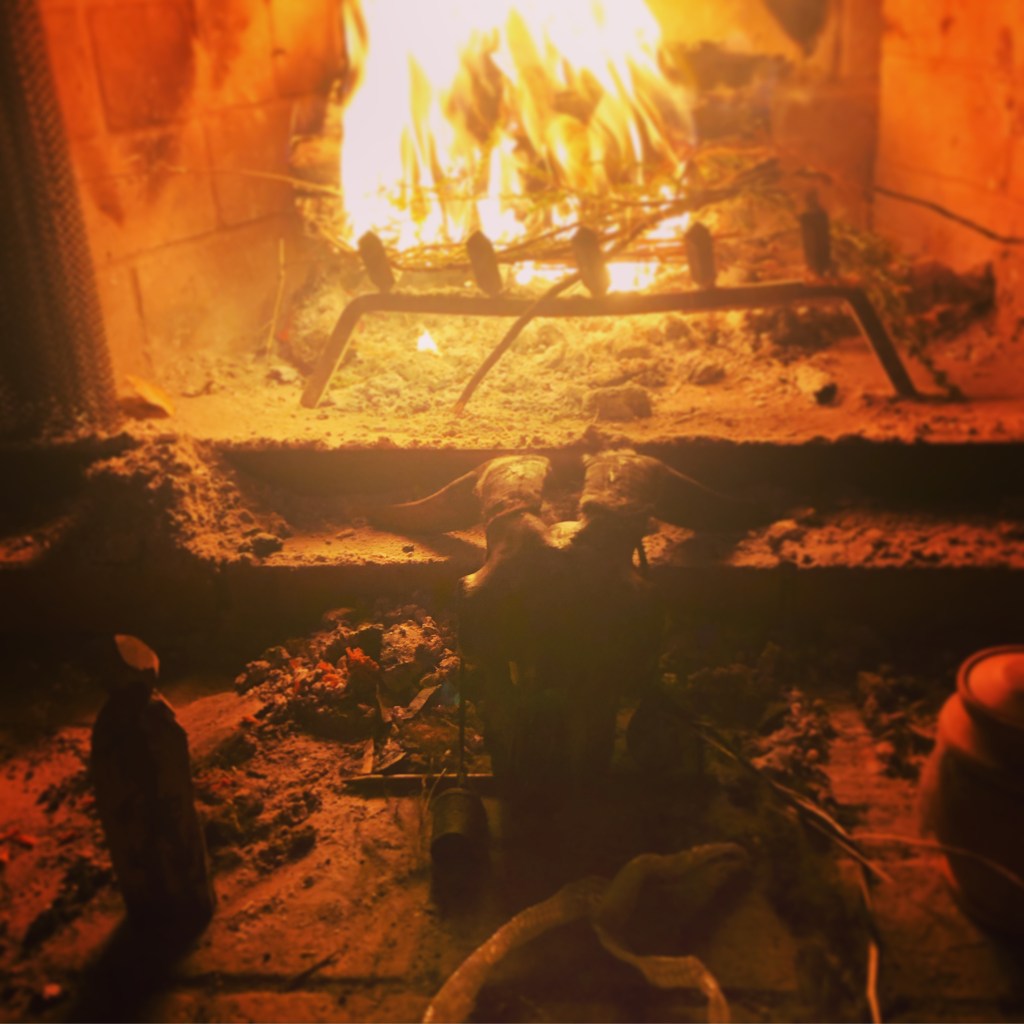
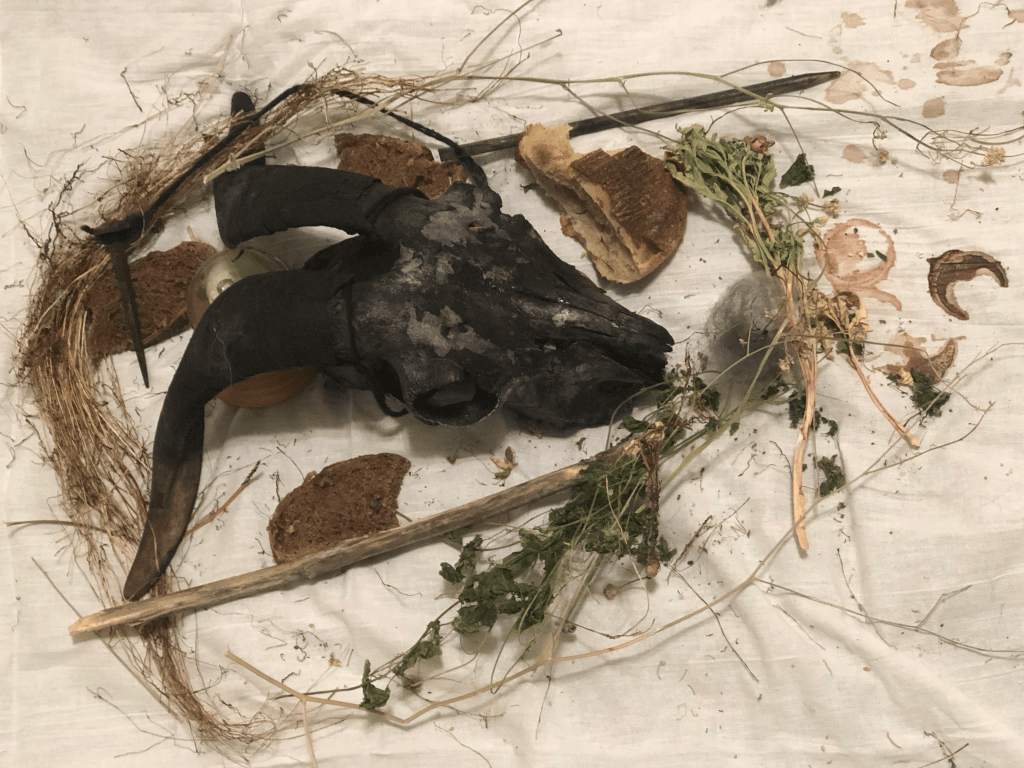

The oak-dye has proven to be quite durable and has maintained it’s color well over the years. I am not a huge fan of painted bones so this has been my go to method of coloring and enlivening bones so I’ve had plenty of opportunities to experiment with my recipes. I was intrigued by a number of sabbatic works mentioning coating bones in tincture of myrrh because most of my spirits are quite fond of myrrh but I’ve never been able to nail down a suitable version. For some reason the bones always end up brittle when I use myrrh alone which I’ve never experienced with other materia. Perhaps it’s more desiccating than other tree resins? Fortunately I have had a lot of success by branching out from bone-specific techniques to natural lacquers in general. One of the most interesting Viridarium Umbris’s “Stain of Sealing” recipe involving multiple extracts of dragon’s blood, myrrh, madder root, and other materia to produce a fragrant lacquer that richly colors, embalms, and is pleasing to spirits. Using the stain as inspiration I developed two recipes – one red, one black, one to enliven and empower the spirits, one to the seduce and venerate the sabbat. Black copal and opoponax form the resinous backbones of my recipes with oak, madder, and dragon’s blood acting as the primary colorants.
Balsam Copal, or Protium, for the summoning and worship of the Celestial Spirits. […] The Black Balsam, known for its immense strength, is burned by the black of the moon to accompany all bewitchings and thaumaturgy, or else given unto the very Stars of Heaven, as well as the Mighty Dead. As an oblation, Copal traditionally accompanies the Rites of Crow’s Bread.
Opopanax, most precious and rare, and beloved of its Nymphs. It commands the virtues of Passion and Fecundity, and is treasured in Charms of Love. It is chiefly found in the form of an oil distilled from the gum.
– Viridarium Umbris
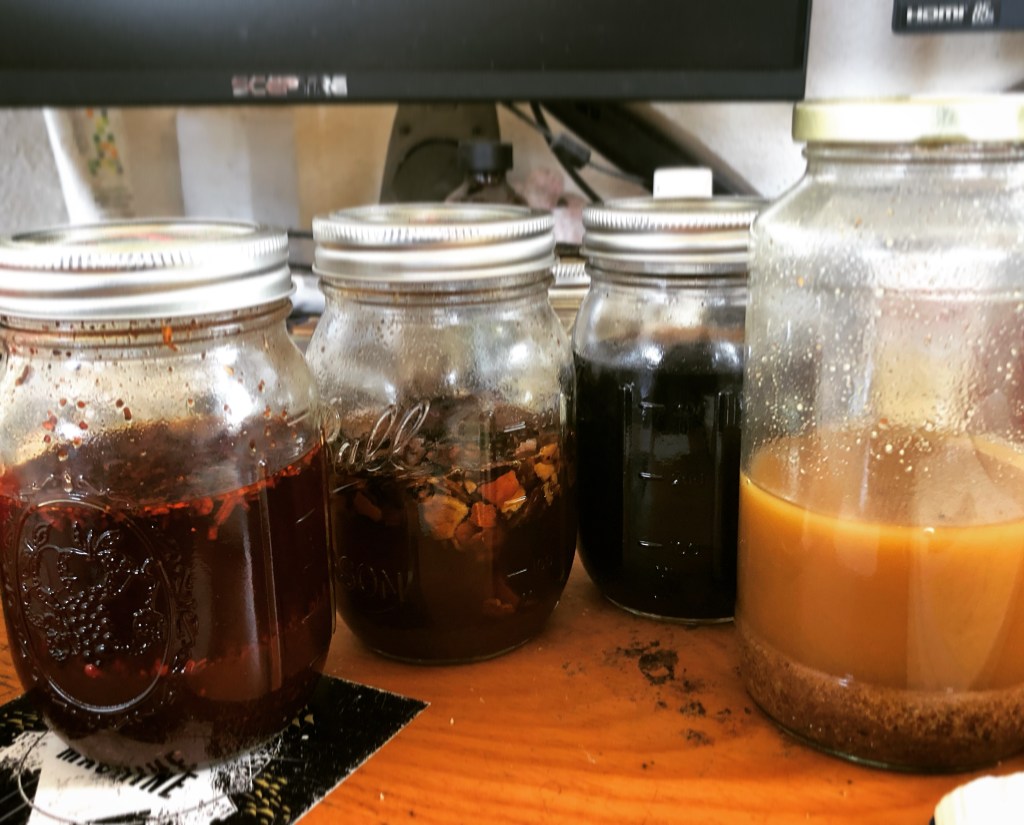
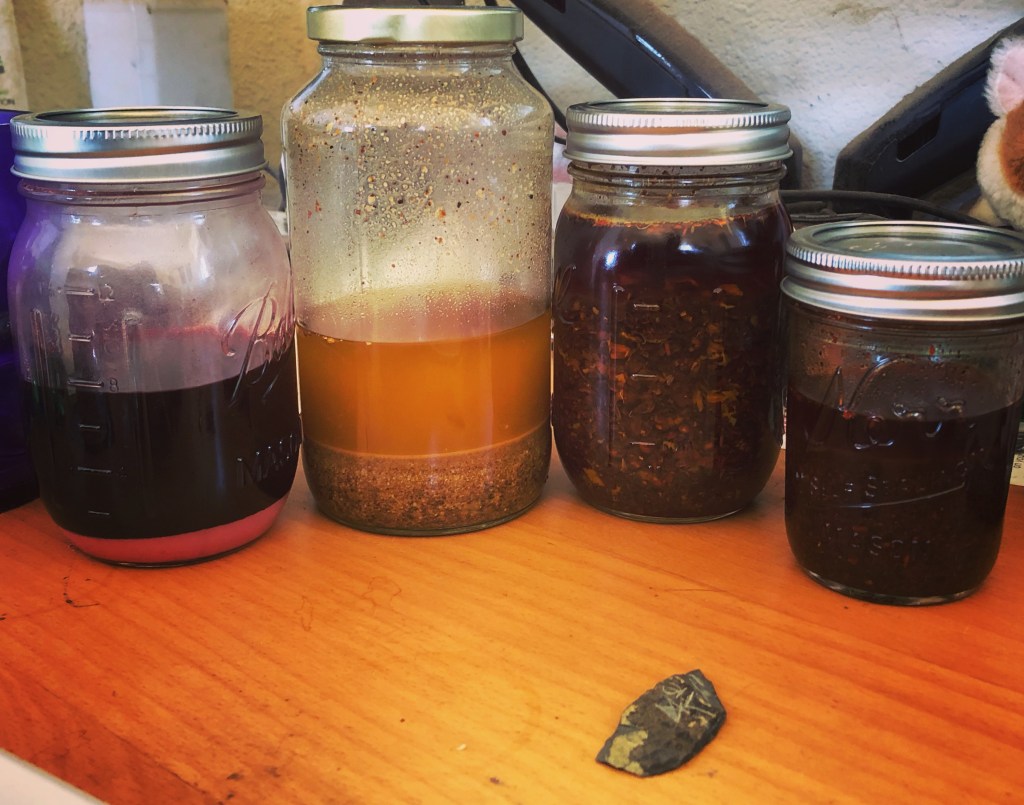
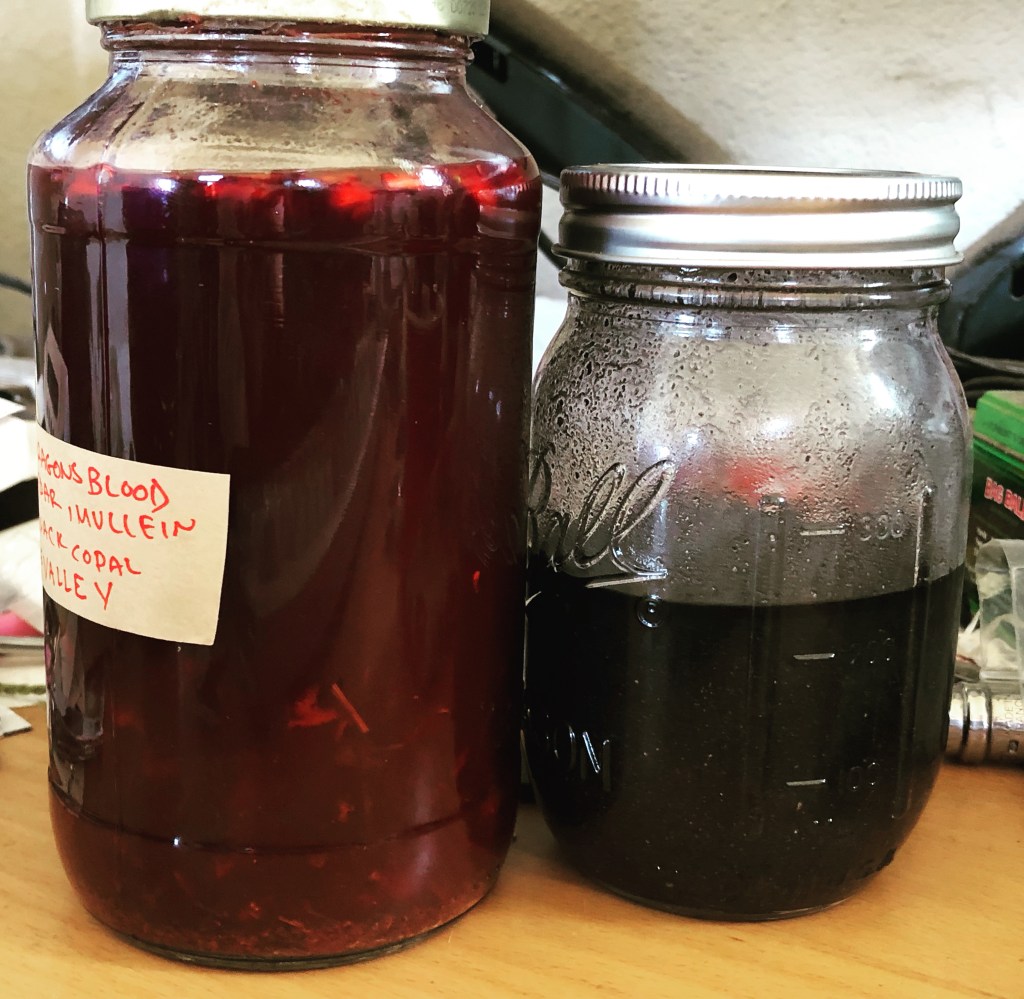
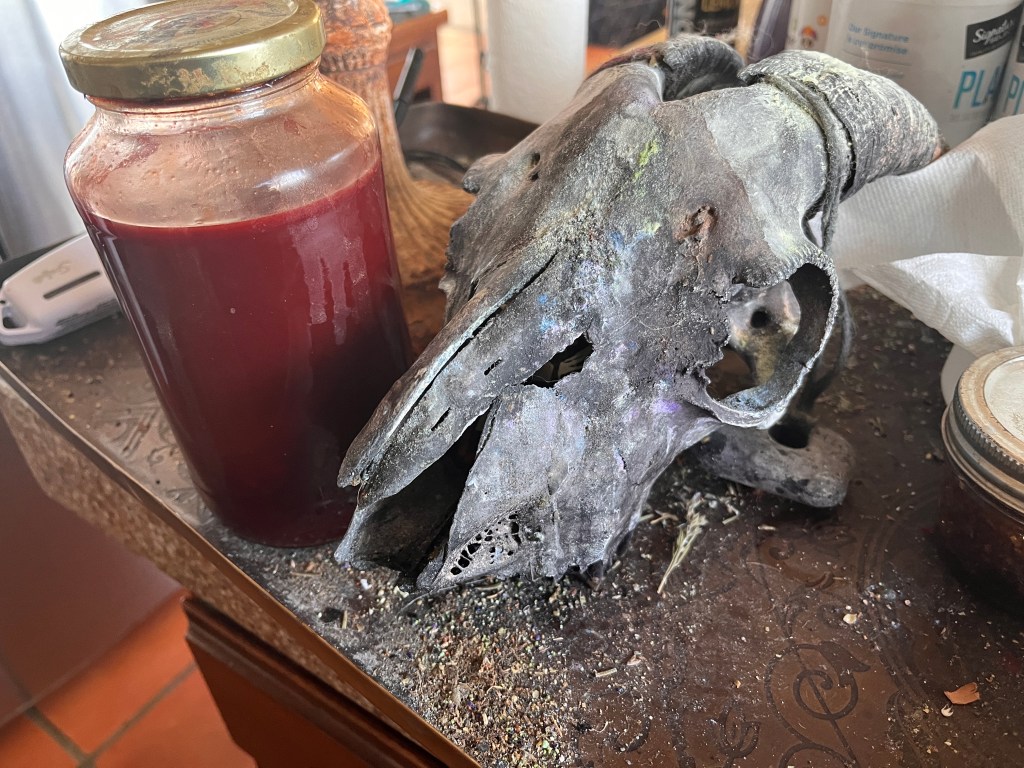
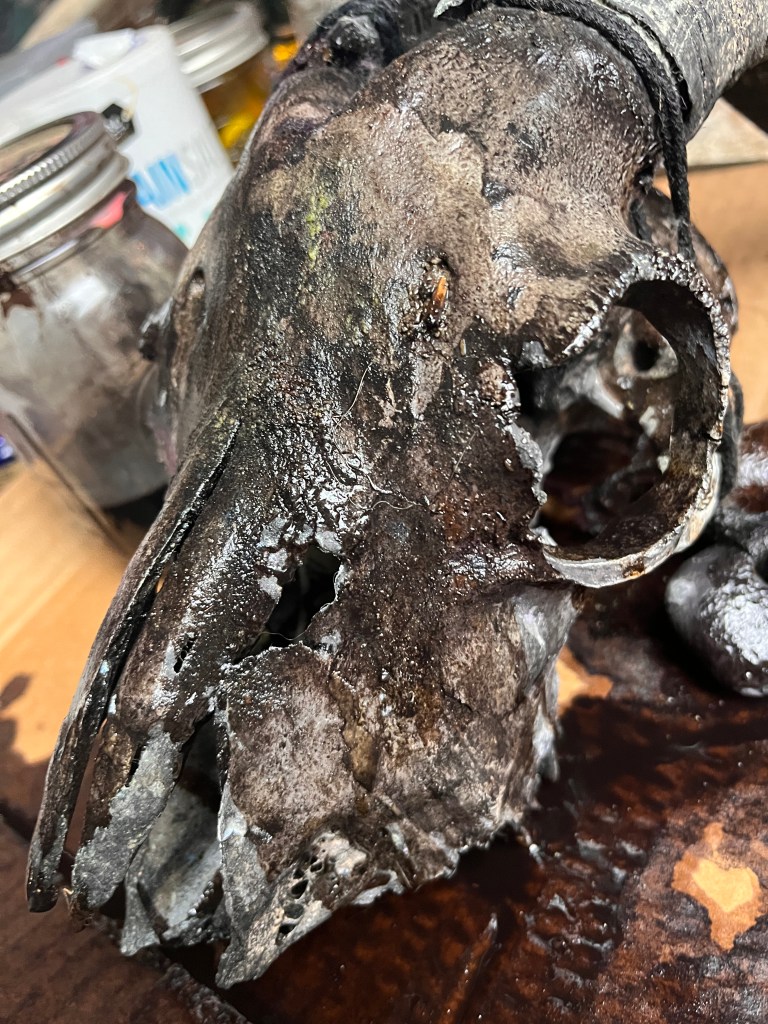
I performed multiple alcohol extractions, adding and removing materia as needed and allowing them to evaporate down between extractions. The vast majority of materia in the black lacquer had nothing to do with color and were instead an inversion what Daniel Schulke refers to as “Crow’s Bread”. Rather than using intoxicants that enable the witch to travel to the sabbat quickly I used intoxicants to bring the sabbat and it’s regents to me. Finally both lacquers were left to age in a cool, dark place for a number of months until they were ready to bathe skulls. Successive libations on the Witch Queen(s) skull produced a thick layer of odorous resin with black copal and and palo santo dominating the scent profile once the alcohol evaporated off. She smells of divinity and wilderness. My fears of increasing the brittleness turned out to be unfounded and it actually made the skull considerably more sturdy. I also really like how it sealed in the bits of colored powder used to create earth-signs that I somehow manage to get on everything during sabbatic rites. Connection to rites past is a prominent aspect of the Dragon Book of Essex and I believe our eidola should transform with us so preserving this is important to me. It forms a tangible connection to the earth-signs from past rituals, providing a gateway to reify their effects through all future rites. All in all it turned out to be an incredibly effective way to venerate and beautify holy bones and I couldn’t be happier with the results. I look foreword to seeing how She evolves with me.
1 – Read more about human cognition and ochre here
2 -The ‘Red Lady’ of Paviland was incorrectly assumed to be a female because of the presence of beads and other grave goods.

 Via Combusta
Leave a reply to Rituals Under the Stars: December Witchcraft – Via Combusta Cancel reply